I’ve seen it so many times over my career.
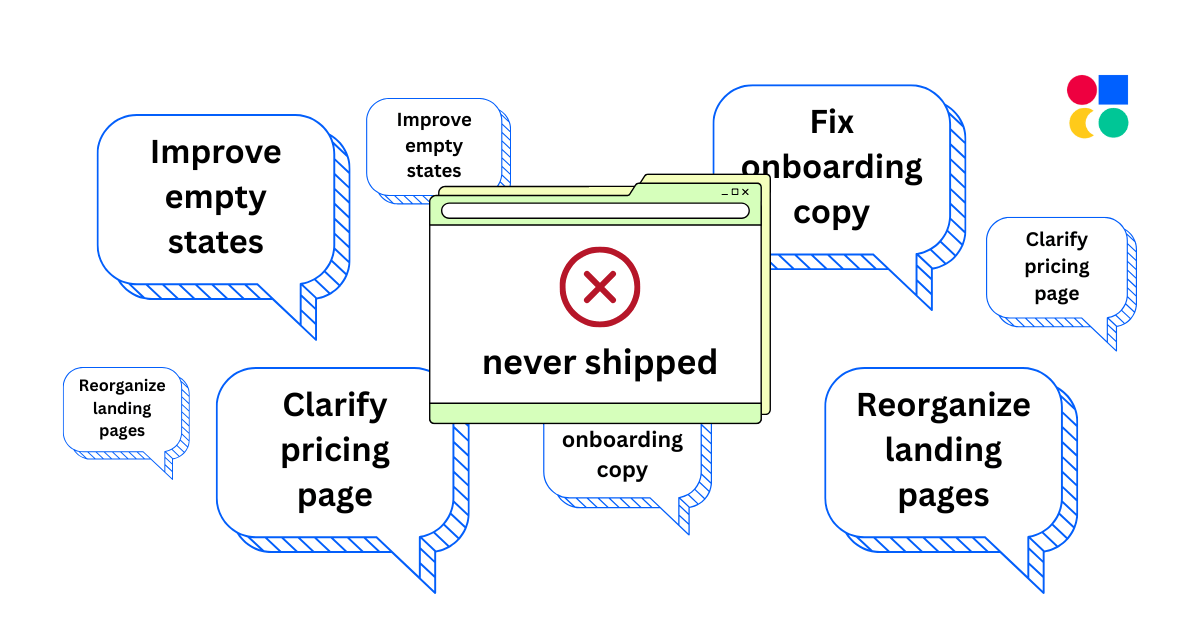
All the “small wins” never get deployed, but guess what does…
Entire website redesigns.
Thousands of dollars, hours upon hours of deliberation, cosmetic focus, etc.
And then to find, a year or so later, you’re back to square one.
It’s true, there’s an allure to getting “everything done” in one fell swoop, but, the reality?
Success is iterative, not immediate.
The Idea Graveyard
Yes, the backlog of “good ideas” that never shipped. The half-started projects, parked redesigns and “we should try this someday.”
Sound familiar?
To be fair, it’s not an uncommon challenge many companies face today. Why? Well, there are a few reasons.
Why Does the Idea Graveyard exist?
Companies find themselves in this position for a number of reasons, but here are the most common I’ve seen:
- Perfectionism. The need to deploy spotless experiences quickly.
- Prioritizing visible, impressive work over effective work. ROI and visual appeal tend to be star students when selecting key projects.
- Project management challenges. Sometimes, it’s a matter of logistics and organization.
The Allure of Big Swings
When a list of ideas stacks up, taking on a full redesign sounds tempting especially since that’s how many currently operate.
Big projects feel:
- Cleaner
- More strategic
- More career-defining
- More impactful
But, in reality:
- They can delay feedback
- They can increase risk
- They can hide what actually worked or didn’t
“A redesign is often a very expensive way to avoid learning.”
That’s not to say redesigns aren’t sometimes helpful, but there are ways to improve ROI, design, content, etc. over time.
The Real Cost of Ignored Small Wins
When you get used to postponing the small wins for when the “big redesign project” begins, you can miss out on the compounding effects of small improvements, learning opportunities, and organizational impact.
Compounding Effects of Improvements
Say, for example, your contact form could be improved with one small tweak and, in turn, it demonstrates a 2% increase in conversions! How much could you be making with just a change in order, field names, etc.?
Learning Opportunity
Elevating a website or experience can offer various opportunities to learn. If analysis paralysis creeps in or you choose to wait to deploy potentially impactful changes, you risk not only the benefits that may come, but also the opportunity to learn what didn’t work.
“Failure” is a rerouting mechanism, not the end of the road.
Organizational Impact
Bringing this up a level, your organization or team can start getting accustomed to unfinished projects or initiatives. Not only that, but ideas can lose momentum and ownership.
It can seem quiet, but the opportunities ignored become louder and louder overtime.
Execute More Ideas
Let me share some thoughts that most may not agree with.
- Not shipping is worse than being wrong.
- Most ideas should be executed—but quickly and decisively.
Ideas are great and all, but don’t mean much unless they see the light of day.
If you don’t act on ideas, you let them wither away alongside their potential.
On the contrary, actively engaging and shipping ideas, helps test them, learn from them and, ultimately, resolve them.
A Better System: Test, Ship, Execute, Repeat
The ideas you’ve had? It’s time to give them the momentum they deserve!
It can be simple.
1. Shrink the idea. What’s the smallest version of this? What’s the MVP (minimum viable product)?
2. Ship fast. Add it to your task calendar and attach due dates within days or weeks, not months.
3. Measure one thing. Identify the KPI(s) you’re interested in. Understand what success looks like for you.
4. Decide quickly. Did it work? Did the idea show improvements? Did it fail? Iterate or close the idea.
As you build this system, notice how your team adapts. Can you develop it so it becomes second-nature?
What to Do With Your Existing “Graveyard”
Ok, ok, but what about all the ideas you already have, just sitting there?
This is where audits and decisions become your best friends.
- Audit your backlog. Which ideas still matter? Which are outdated? Which are you curious about testing?
- Force decisions. It’s time. These ideas have waited long enough. Test the ones that matter, delegate or delete them.
If it hasn’t moved in 90 days, it’s not an idea—it’s clutter.
Nurture a Cultural Shift
To help encourage this “shipping” mentality in your team’s or company’s culture, consider the following:
- Reward shipping, not just ideation. When you celebrate a small launch, you encourage growth and not perfection.
- Normalize killing ideas publicly. Public “failure” helps others feel comfortable learning without the stress of being wrong.
- Celebrate small wins visibly. When an idea does generate a positive outcome, celebrate it! Recognize the incremental wins because they all add up.
Resolve Ideas, Don’t Leave Them Unanswered
Great and grand ideas are awesome, but sometimes it’s the small, seemingly mediocre ones that can surprise you.
When an idea pops in your mind, think of it as a question—
“What if we changed the title of this section to better represent the content? Would we see [X] improvements?”
Then, work towards answering the question. When you ship, test, analyze, etc. you’re allowing this idea to be resolved.
Let’s bring ideas to life! They’re ready when you are.
“Your job isn’t to protect ideas. It’s to give them a chance to live—or let them go.”
 luna tidrick